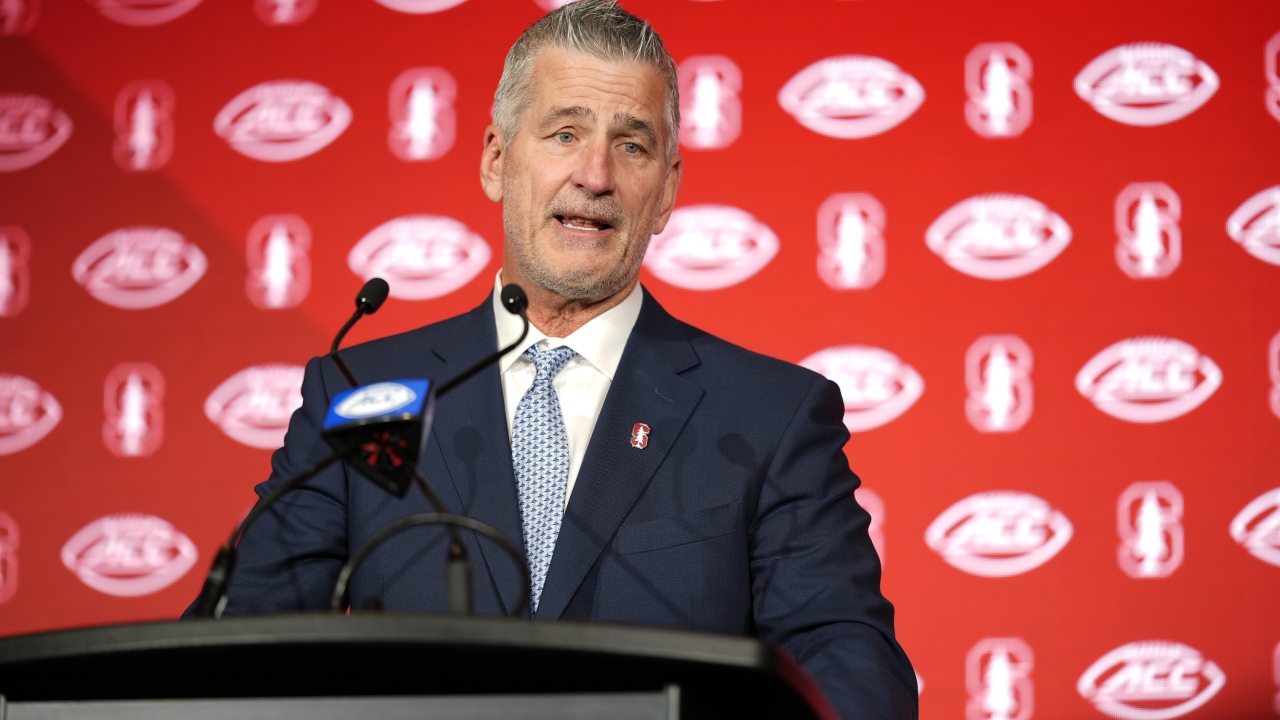
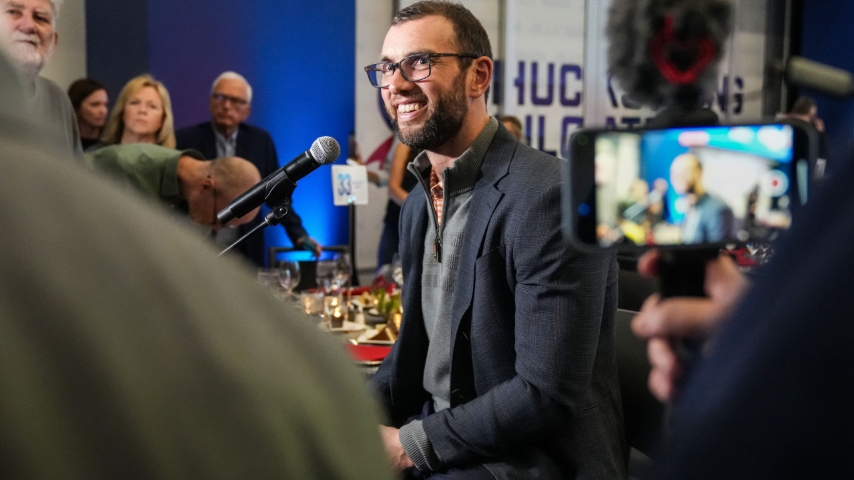
Stanford has turned to former NFL head coach Frank Reich to guide its football program through the 2025 season, naming him interim head coach as the program transitions under new leadership with general manager Andrew Luck.
While the plan is for Reich to lead the team for just one season, his focus is on helping lay the groundwork for sustained success. The 63-year-old Reich joins Stanford at a unique moment in its history, working alongside new general manager and Cardinal legend Andrew Luck to usher in what the program is calling a "new era."
“When Andrew called and said, would you help us out this year, first I was a little bit hesitant," Reich said. "But then, when I came out and I just realized, listen, I've experienced a lot of things in life in the football world, but I get an opportunity to coach Stanford? I mean, this is a unique place."
Having spent just three months on campus, Reich quickly became a believer in the culture that defines Stanford.
"I've drank the Kool-Aid, and it is different. It is different in the best of ways," he said. "The culture there is different. The people. It's really a unique place. Really where, for me, it was about the experience of coaching the student-athlete, the Stanford student-athlete... that I knew would make me a better coach, a better person."
Reich, who has coached at the highest level in the NFL, acknowledged the differences in working with college players, particularly the limited time spent with athletes compared to the pros. But he also praised Stanford’s players for taking ownership.
“You have to count on the players doing that for themselves and doing that amongst each other,” Reich said. “I believe we've got that kind of leadership.”
He emphasized that the lessons he hopes to instill go beyond football.
“There's certain principles and standards that you live by in life that help us to win and create a winning culture and really create an opportunity to elevate your own game and elevate other people around you,” Reich said.
In the short term, Reich’s mission is to stabilize the program and help define its identity during a period of major transition. In the long term, he hopes to lay a foundation for sustained success built on culture, character, and commitment.
"I know I've got something to offer. I've got something to offer to help Andrew, I've got something to offer to help these guys," he said. "We're just going to work hard at getting better all the time."