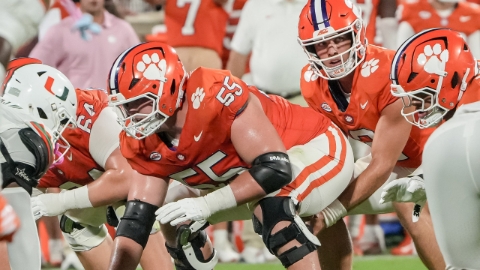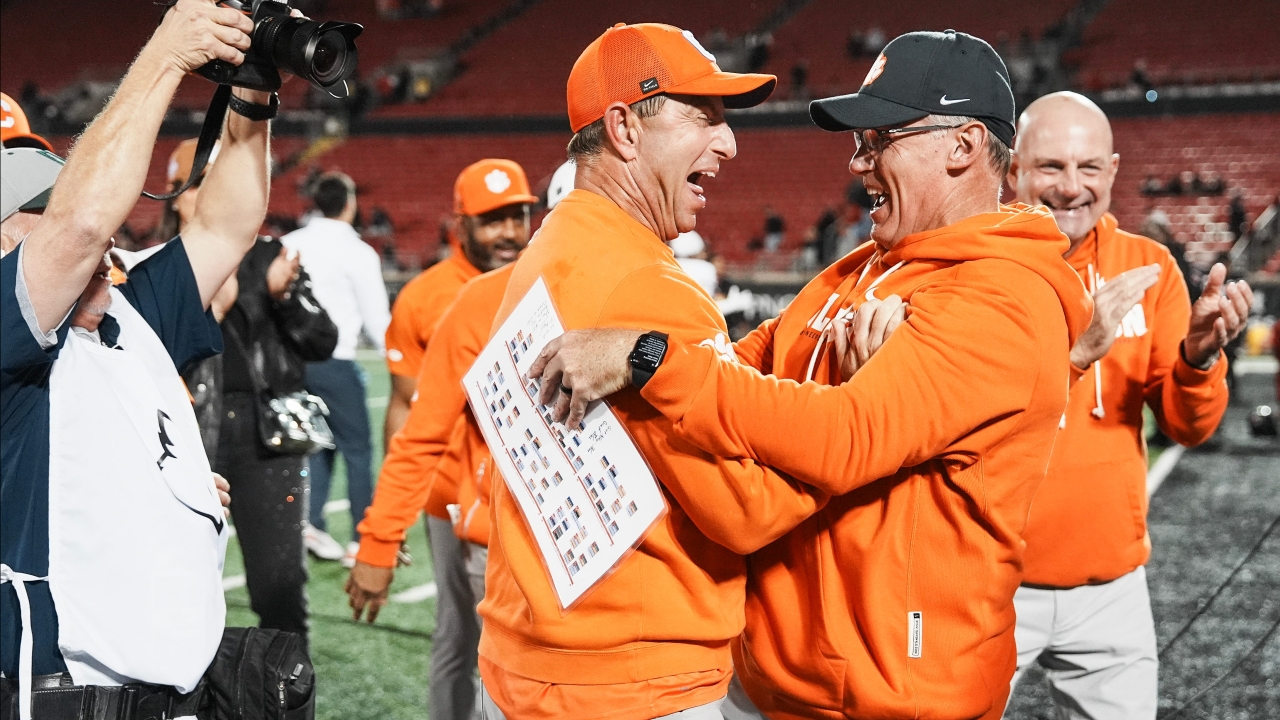
For a program accustomed to playoff talk and championship standards, bowl games can sometimes be framed as consolation prizes. But for Dabo Swinney and Clemson, the Bad Boy Mowers Pinstripe Bowl represents something different — a rare convergence of opportunity, perspective, and purpose that resonates deeply with the Tigers’ head coach.
“This is a bowl that I’ve always kept my eye on,” Swinney said. “What a unique opportunity to be able to play a football game in Yankee Stadium.”
In over two decades at Clemson, first as an assistant, then as head coach, Swinney has experienced the full spectrum of postseason football. Yet this marks the first time his program will play a postseason game in New York City. That novelty alone matters, especially to a coach who has long emphasized experiences as part of player development.
“This is an opportunity that we have not had in my tenure as the head coach,” Swinney said. “Really excited about taking our team. I know we’ll have a lot of kids on the team that have never been to New York.”
For Swinney, the Pinstripe Bowl is not just about the opponent or the result. It is about exposing his players to something bigger than themselves — an iconic city, a historic stadium, and a stage that carries weight far beyond college football. Yankee Stadium, while not the original, is still steeped in sports history and represents a setting unlike any Clemson has encountered in postseason play.
“To not only go to an iconic city, but to play in a historic stadium and with so much tradition, and also to bring Tiger football up there where we have a huge alumni base,” Swinney said. “Just really excited about it.”
That alumni presence is another reason the bowl resonates with Clemson’s head coach. New York is one of the program’s strongest out-of-region alumni hubs, and the chance to showcase Clemson football on that stage carries symbolic value. It reinforces Clemson’s national footprint — something Swinney has worked to build throughout his tenure.
The matchup itself also matters. Clemson will face Penn State, a program Swinney described as a “national power,” adding competitive gravity to the event. In Swinney’s view, the opportunity to play a respected opponent on a prominent stage elevates the bowl beyond its label.
“It’s a great opportunity,” he said. “Anytime you get a chance to represent Clemson, represent Penn State, it’s a special opportunity. To be able to do it on a stage like the Penn Stripe Bowl presents for everyone, it’s a unique experience.”
Perhaps most importantly, the Pinstripe Bowl matters because of where Clemson started — and how it finished. Swinney acknowledged openly that the Tigers’ season did not begin the way anyone envisioned.
“Certainly did not have the start that we wanted,” he said.
But Clemson closed strong, winning the state championship 28-14 over South Carolina, capping a string of four consecutive victories. For Swinney, that context makes this game about momentum and mindset. One of his program’s internal goals, he said, is simple: “win the closer.”
“So this is the closer,” Swinney said. “And it just so happens we’re playing in Yankee Stadium to do it.”
There is also a personal layer for Swinney. A lifelong baseball fan who grew up playing shortstop in Pelham, Alabama, Swinney has longstanding ties to the game and to iconic venues. He has thrown out the first pitch at Wrigley Field. He has stood on the field at Fenway Park. And, famously, he once walked out of Yankee Stadium carrying first base — a souvenir that still sits in his office.
“You just feel the history when you approach the stadium,” Swinney said.
Now, history becomes the backdrop for Clemson’s season finale. For Swinney, the Pinstripe Bowl is not about settling. It is about finishing — with gratitude, pride, and perspective.
“There’s a lot of people not getting to play,” he said. “So thankful that we’ve earned the opportunity.”
For Clemson and its head coach, that opportunity means everything.