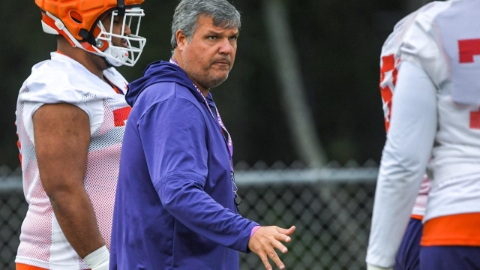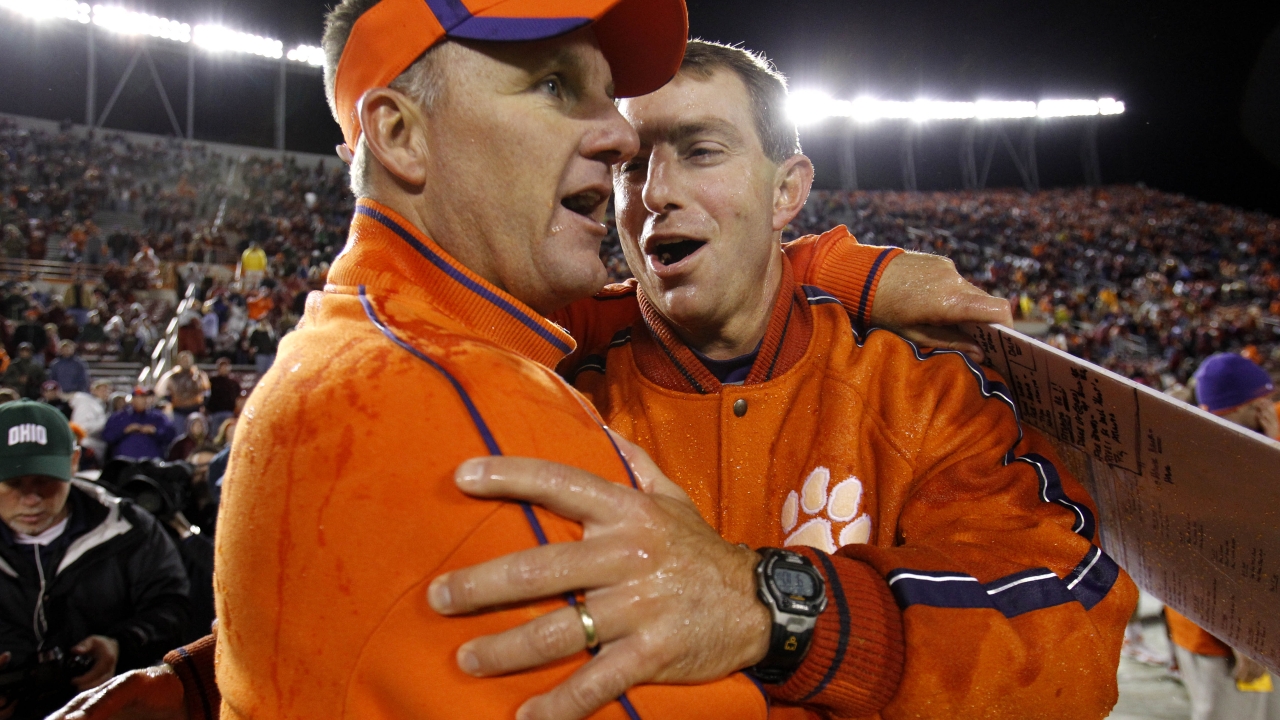
Dabo Swinney has never been shy about trusting his instincts, and this week he leaned into familiarity and conviction, turning back to a coach who once helped reshape Clemson football.
After parting ways with Garrett Riley earlier in the week, following three seasons in Tiger Town, Swinney moved quickly to bring Chad Morris back to Clemson as the Tigers’ offensive coordinator, a decision rooted as much in history as in urgency.
The move closes a turbulent chapter and opens one that many around the program know well.
Morris was the architect of Clemson’s offensive transformation in the early 2010s, a period that helped propel the Tigers from ACC contender to national brand.
When Swinney hired him the first time, it was a gamble on tempo, aggression, and quarterback-driven football.
The bet paid off.
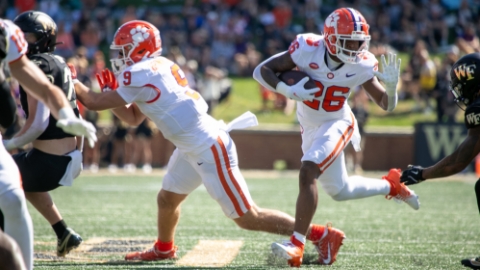
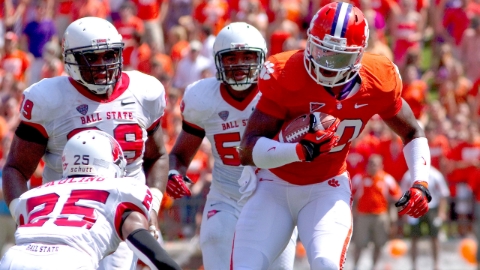
Clemson scored points in bunches, played with visible confidence, and established an offensive identity that became the foundation for everything that followed. During his 52 games as offensive coordinator, Clemson averaged 36.3 points and 468.5 yards per game.
This hire comes at a pivotal moment for Swinney, who has spent the last several seasons balancing continuity with evolution.
Riley arrived with high expectations and moments of promise, but consistency never fully materialized. After three years, Swinney decided the program needed another refresh.
In Morris, he sees a coach who understands not just Clemson’s playbook history, but Clemson’s pulse.
When Morris left for SMU, he said in a statement that he and his family, “Will always be Clemson Tigers with orange in our blood and a Tiger paw near our heart.”
I’ve had the opportunity to interview Coach Morris each week this season, and those interviews have now become invaluable. I can attest that he loves Clemson.
We will be releasing each of those interviews on ClemsonSportsTalk.com for fans to digest during the offseason.
Back to Swinney, there’s also a deeper layer to the decision. As a coach, he has always valued alignment — philosophically, culturally, and personally — perhaps more than any head coach in the sport.
Morris fits that mold.
He knows what Swinney expects from an offensive coordinator, how practices are structured, how players are developed, and how accountability is enforced. There is no learning curve about what it means to coach at Clemson.
From an on-field standpoint, Morris’ return signals a shift back toward pace and pressure. His offenses are designed to stress defenses horizontally and vertically, simplify quarterback decision-making, and play fast enough to expose fatigue and confusion.
It’s an approach that once unlocked Clemson’s offense and one Swinney clearly believes can do so again, especially in a landscape where spacing and tempo remain currency.
The hire also speaks to Swinney’s broader philosophy at this stage of his tenure. Rather than chasing the newest schematic trend, he has chosen trust and experience. Morris isn’t being brought in to experiment; he’s being brought in to stabilize, energize, and reestablish an identity that Clemson once wore comfortably.
For the Tigers, the message is clear. This isn’t about nostalgia — it’s about recalibration.
Swinney is betting that a familiar voice, one proven in Tiger Town, can help Clemson’s offense rediscover its edge.
In a sport defined by constant change, Clemson’s head coach has opted for something rarer: a return to something he knows works.