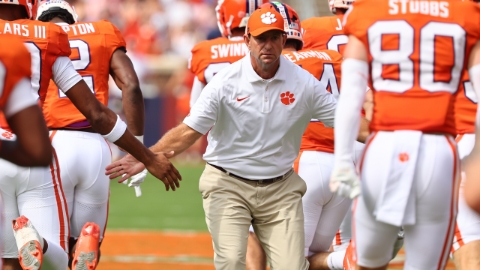
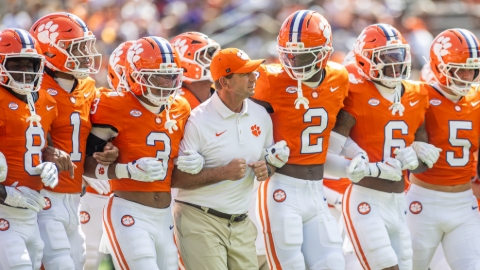
Back to the Future at Clemson: Why Chad Morris’ motion-heavy offense is key for 2026
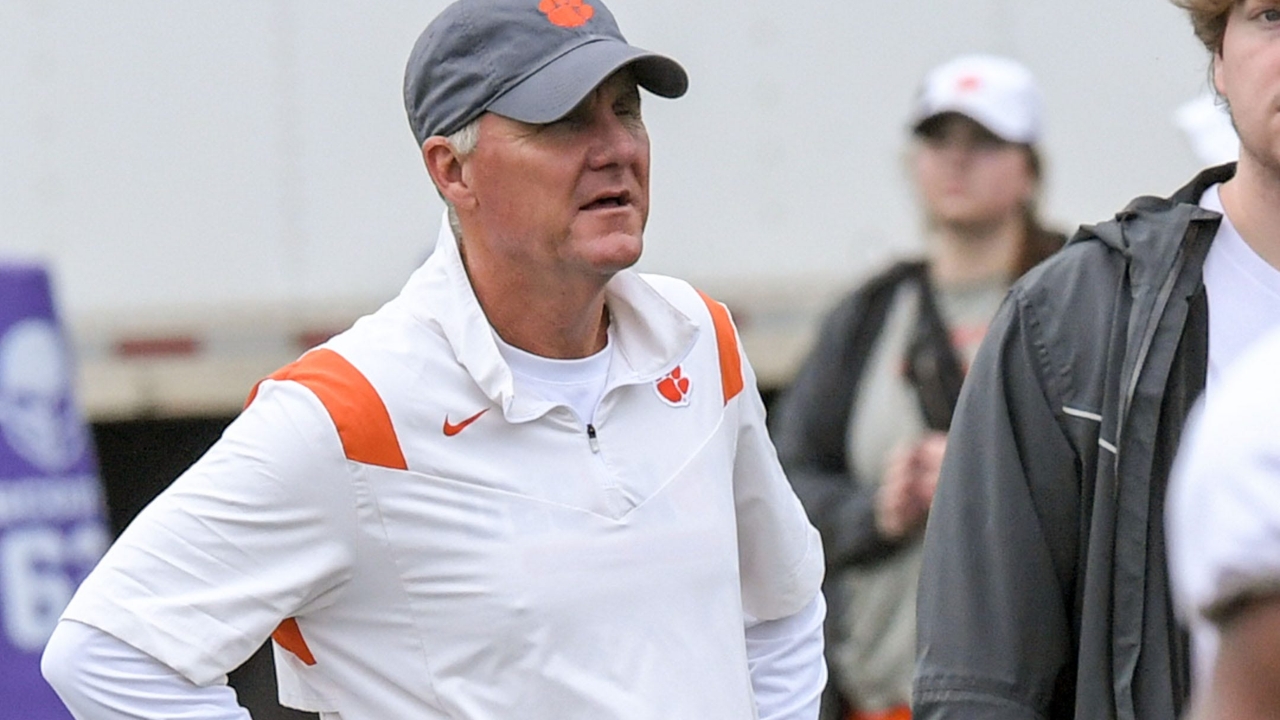
By the time Wednesday’s edition of Clemson Sports Talk reached its second hour, the focus had shifted from transfer portal movement to something that could define Clemson’s next step: the return of Chad Morris as offensive coordinator.
The hire was framed as a “back to the future” moment for the program, reconnecting Clemson with an offensive identity that helped fuel its rise in the early 2010s.
Faxon Childress of 105.5 The Roar didn’t hesitate when asked for his reaction.
“I really liked the hire,” Childress said. “I thought Chad did a phenomenal job here from 2011 to 2014. I think he's largely responsible for the ascension of the Clemson offense.”
While acknowledging the obvious questions, including whether Morris can adapt his system to the modern college game, Childress said the fit aligns with where Clemson appears to be headed.
“I think it's a really exciting time to be a Clemson fan,” Childress said. “I think anytime you've got Chad Morris, you know you're going to have the Red Bull. You know you're going to have the energy. You know you're going to run a ton of plays and put a ton of points up on the board.”
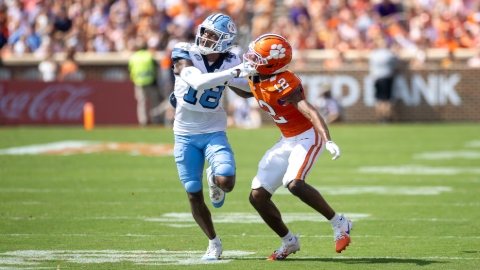
Much of the discussion centered on an element Clemson’s offense often lacked in recent seasons: motion and “window dressing.”
The value of motion goes far beyond aesthetics. It provides information — allowing offenses to identify coverages, force defensive communication, and create pre-snap clarity for quarterbacks.
At the highest level, offense becomes a game of recognition: reading tells, spotting clues, and using those details to gain an advantage.
“I do think in some respects there were a lot of aspects of Garrett Riley's offense that lacked the opportunity to pick up on some tells,” Childress said.
That recognition advantage, he explained, directly translates into explosive opportunities.
“If you can get a bead and a read on the opposition and what you think they are trying to do, then that puts you at a decided advantage to make big plays and attack a team at a spot that you might think they are weak.”
Asked how impactful motion and “eye candy” could be moving forward, Childress was emphatic.
“I think it's the most important thing offensively in football in 2026,” he said. “For the life of me, I have no idea why Clemson wasn't doing it more frequently throughout the course of these past three seasons.”
Childress also highlighted a detail he believes hasn’t received enough attention: helmet communication.
“Another interesting point that I haven't heard a lot of people bring up, but nobody's talking about the green dot,” Childress said of the ability to speak directly to the quarterback.
With Morris’ preference for early alignment and fast tempo, communicating with the quarterback until 15 seconds remain on the play clock could be incredibly beneficial.
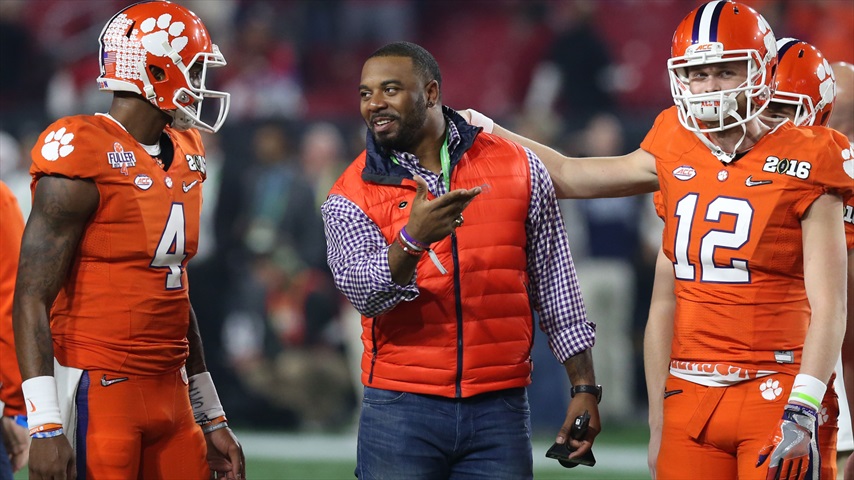
“We know Chad wants to get up to the line early in the play clock. He can communicate with his quarterback, whoever that may be this year, until there's 15 seconds on the play clock,” Childress said. “So I'm anticipating an offensive style that's getting up to the line very, very quickly.”
When combined with motion, that communication window could provide Clemson with a level of structural clarity it has been missing.
Tempo was also tied directly to Clemson’s ability to regain balance on offense.
A faster pace allows teams to run more plays, which naturally creates more opportunities to establish the run and dictate defensive behavior.
“That's not going to be an issue with Chad Morris and his offense,” Childress said. “The tempo is going to allow you to run more plays, which in turn is going to allow you to strike a better distribution between the run and the pass and have a more balanced attack on the ground game.”
He didn’t shy away from where Clemson stood statistically.
“Clemson finished outside the top 100 nationally in running the football this year. That's not good enough or anywhere near good enough,” Childress said. “Realistically speaking, you need to be in the top 30 to have any sort of championship hopes, whether that be ACC or national.”
This return is not simply a replay of 2011. Morris arrives with more experience — and perhaps a different mindset — at a pivotal moment for Clemson.
The Tigers are navigating a new offensive system, quarterback uncertainty, and an evolving landscape driven by the portal. With a challenging opener at LSU looming, the margin for adjustment is thin.
The argument made during Wednesday’s show was clear: Clemson’s decision to go “back to the future” is a bet on answers, pre-snap clarity, pace, and an offensive identity built to stress defenses again.

_68bedd63.png)