Clemson Couldn't Run on LSU Last Year. Chad Morris Knows That Has to Change

Thirty-one yards.
Of all the numbers that told the story of Clemson's 17-10 loss to LSU last season, that one might be the most important as the Tigers prepare for Saturday night's rematch in Baton Rouge.
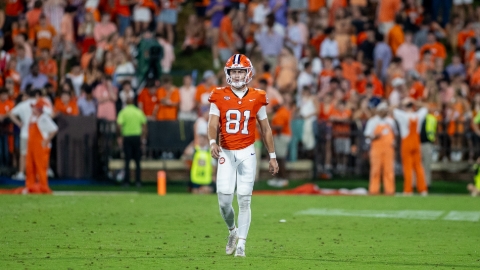
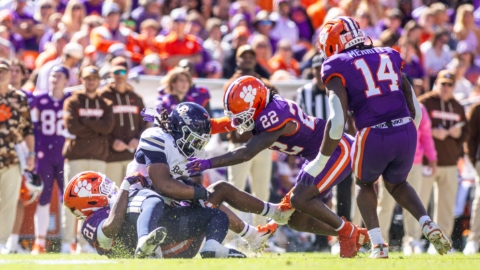
Clemson rushed for only 31 yards on 20 attempts that night, never establishing enough of a ground game to take pressure off Cade Klubnik and an offense that was shut out in the second half. The Tigers finished with just 261 total yards and 13 first downs.
A year later, the quarterback has changed. The offensive coordinator has changed. But one of Chad Morris' first challenges in his return to Clemson is obvious: LSU has to respect the run this time.
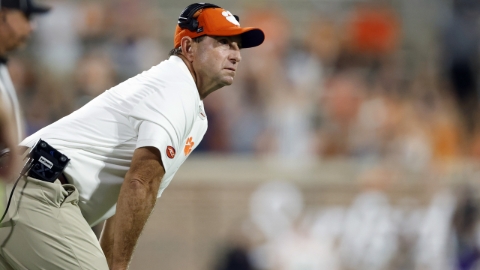
Dabo Swinney made that clear Monday night during Tiger Hour when discussing what Clemson has to do to win the opener.
“We have to find a way to be efficient in the run game, and that’s going to start with winning that matchup up front,” Swinney said.
Clemson finished the 2025 season averaging 124.5 rushing yards per game and 3.9 yards per carry. In total, the Tigers ran for 1,618 yards in 2025, which is Clemson’s lowest single-season total since 2008, when the Tigers managed only 1,450 yards on the ground.
Credit has to go to Adam Randall, who, as a converted wideout, did provide production, leading Clemson with 814 rushing yards and 10 touchdowns, but the Tigers never consistently developed the kind of balanced attack that characterized Morris' best offenses during his first stint at Clemson.
And that's an important distinction.
Morris' Clemson offenses are understandably remembered for the passing game. Tajh Boyd threw the football to guys like DeAndre Hopkins and Sammy Watkins, making Clemson one of college football's most explosive offenses.
But those teams could run it, too.
In 2010, the season before Morris arrived, Clemson rushed for 1,807 yards and averaged 139 yards per game. In Morris' first season in 2011, that increased to 2,219 yards and 158.5 per game.
Then came the high-water mark.
Clemson rushed for 2,484 yards in 2012, averaging 191.1 yards per game while producing 512.7 yards of total offense and 41 points per contest. In 2013, the Tigers followed with another 2,270 rushing yards and an average of 174.6 per game.
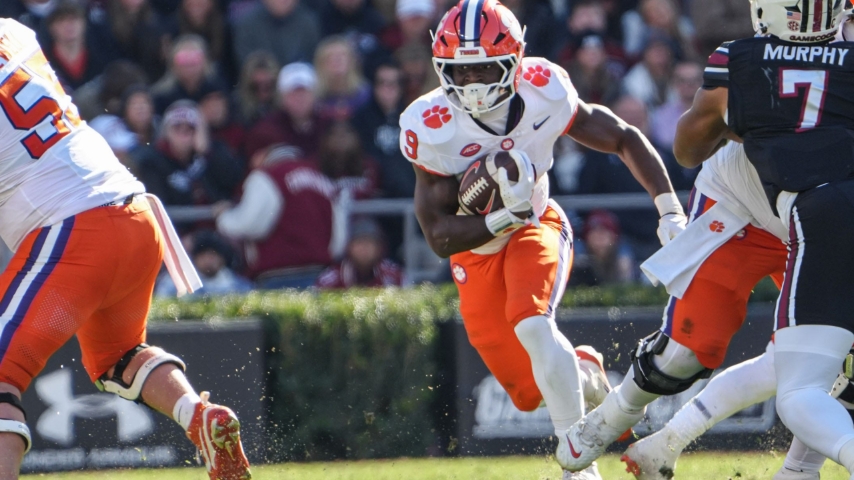
Those weren't run-first offenses. They were offenses capable of making a defense pay regardless of what it chose to take away.
From 2011-13, Clemson produced a 3,000-yard passer, a 1,000-yard rusher and a 1,000-yard receiver in three consecutive seasons. Clemson and Baylor were the only FBS programs to accomplish that feat in each of those three years.
Andre Ellington topped 1,000 rushing yards in Morris' first two seasons. Rod McDowell did it in 2013 with 1,025 yards on 139 attempts. Yep, you can double-check if you want, but “Hot Rod” eclipsed 1,000 yards in a single season.
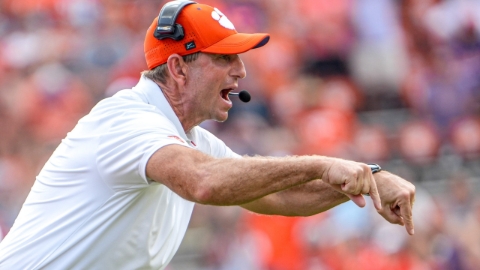
Morris wasn't shy about the importance of that part of his offense.
“We want to run the football,” Morris said after Clemson rushed for 226 yards in a 41-0 win over NC State in 2014. “We want to be more effective in the run game.”
More than a decade later, the personnel and circumstances are completely different, but the objective isn't.
Clemson needs balance.
The Tigers enter 2026 with a reconstructed backfield. Randall is gone, leaving sophomore Gideon Davidson as one of the players positioned to take on a larger role.
Davidson showed flashes as a freshman, rushing 60 times for 260 yards, an average of 4.3 yards per carry. Clemson's current backfield also includes Chris Johnson Jr., David Eziomume, Jay Haynes, and Jarvis Green.
Swinney noted Monday that he feels that Clemson’s running back room is “devalued,” but capable of “making a difference for us.”
Whoever gets the carries Saturday night will be operating in considerably different circumstances than Clemson's backs did a year ago.
With Morris back running the offense and an inexperienced quarterback playing in Tiger Stadium, establishing the run becomes even more important.
It just feels like asking either quarterback to convert obvious passing situations against LSU is probably not Clemson's preferred formula.
Last year's game demonstrated why.
Morris doesn't need Clemson to recreate the 2012 offense Saturday night, although that would be nice.
The Tigers simply can't rush for 31 again.
For all the attention Clemson's new offense and quarterback will receive when the game kicks off at LSU on Saturday, one of the first indications of whether Morris' return is making a difference may come from something much more basic.
Can Clemson run the football when LSU knows it needs to?
A year ago, the answer was no.
— Swanny