Before Baton Rouge, There Was Athens: The Clemson Road Opener That Was Even Bigger
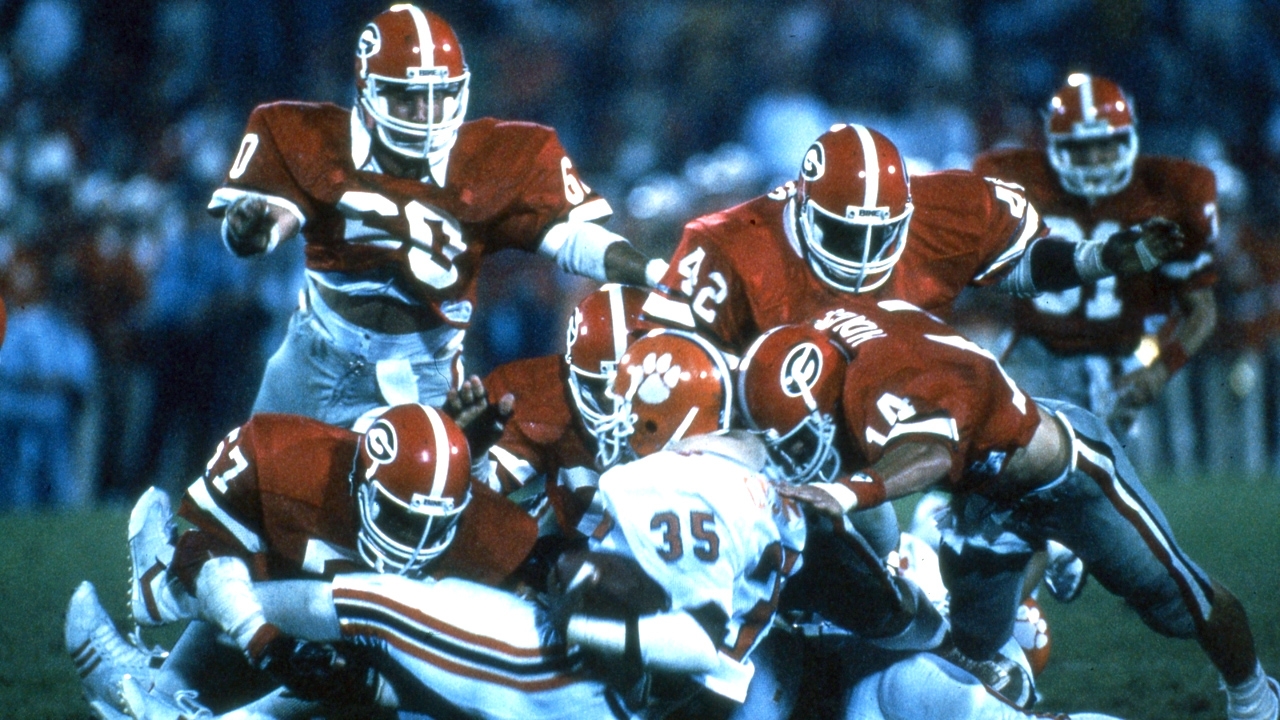
There are plenty of reasons to believe Clemson’s 2026 season opener at LSU could be one of the biggest road openers in program history.
Clemson will walk into Tiger Stadium on Sept. 5 for a 7:30 p.m. kickoff on ABC, opening a season in Baton Rouge against an LSU program beginning a new era under Lane Kiffin. College GameDay will be there, adding another layer to an already enormous opening weekend matchup.
For Clemson, the stakes are obvious.
The Tigers are coming off a disappointing 7-6 season in 2025, a year in which they went 4-4 in ACC play and 3-4 at home after entering the season with College Football Playoff aspirations. There isn't much runway to figure things out in 2026 for Dabo Swinney’s squad.
Given all of that, I recently posed a question to longtime Clemson sports information director and Clemson Hall of Famer Tim Bourret.
Is LSU in 2026 the greatest road opener in Clemson football history?
Bourret didn't hesitate.
“No.”
Well, there goes that story.
Except Bourret had a pretty compelling reason for his answer.
“The answer to that question would be the 1982 game against Georgia, which was Clemson, the defending national champion, against Georgia, who had won the national championship the previous year,” Bourret said. “So you had each of the first two, each of the most recent national championship teams playing against each other on a Monday night.
“We were the Monday Night Football game before the NFL season began. It was a nine o'clock primetime game, and believe me, it was huge. I mean, we were in the middle of a 32-2 run between 1981 and 1983.”
It's difficult to construct a modern equivalent.
Georgia had won the 1980 national championship behind Herschel Walker. Clemson then went 12-0 in 1981, beating Georgia 13-3 along the way before defeating Nebraska in the Orange Bowl to claim its first national championship.
Then the two programs opened the following season against one another.
Not at a neutral site.
Not as part of a made-for-television kickoff event in Atlanta or Charlotte.
In Athens.
On Labor Day night.
ABC had originally been scheduled to televise a Clemson-Georgia game later in September, but the network requested that the schools move the matchup to Labor Day. Clemson and Georgia rearranged their schedules, and Georgia installed lights at Sanford Stadium in preparation for the national television showcase.
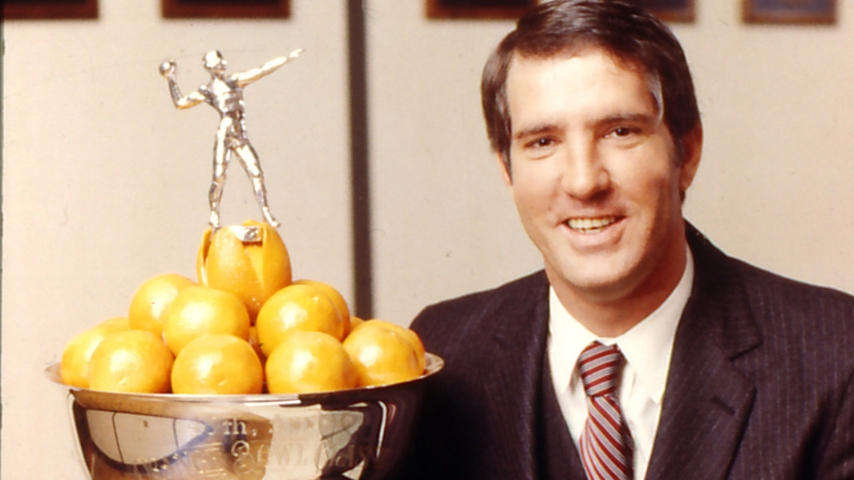
The result was No. 11 Clemson, the defending national champion, against No. 7 Georgia, the 1980 national champion, in front of 82,122 fans and a national television audience with Keith Jackson on the call.
Bourret remembers walking into the press box and immediately recognizing the magnitude of the night.
“I do remember going in there, walking in the press box, and they actually were taping a pregame show. and they were interviewing Beano Cook,” Bourret said.
For Bourret, though, there's one misconception about comparing that game to a modern event such as Clemson-LSU.
The media coverage wasn't smaller in 1982. In his estimation, it was greater.
“I make the point that the coverage nationally in the 80s was much, much greater for that game and that era in general because you had all the major newspapers, had national college football people who covered the game,” Bourret said. “You had the New York Times, the Chicago Tribune, the Los Angeles Times, the Dallas Morning News.
“I bet the Atlanta Constitution had eight guys covering that game. You don't have anything close to that today.”
There are infinitely more avenues for coverage now, from national websites to social media, podcasts, television networks, and around-the-clock digital reporting. But Bourret's point is an interesting one. In 1982, a game of that magnitude could draw the national college football writers from major newspapers all across the country into the same press box.
“You would probably have 60 writers cover that game of major newspapers,” Bourret said. “The LSU-Clemson game, you might have 20.”
Then there was the game itself.
Homer Jordan was an Athens native who had just quarterbacked Clemson to the national championship. After Georgia lost a fumble deep in its own territory, Clemson recovered at the Bulldogs' 11-yard line. Jordan eventually scored on a six-yard run to put the Tigers ahead 7-0.
Nobody knew it at the time, but Clemson wouldn't score again.
Georgia's only touchdown didn't come from its offense, either. Early in the second quarter, Dale Carver blocked a Dale Hatcher punt, and Stan Dooley recovered it in the end zone.
“I believe it was the only punt Dale Hatcher had blocked in his career,” Bourret said. “And it was returned for a touchdown.”
Kevin Butler added field goals of 39 and 23 yards, and Georgia's defense repeatedly turned Clemson away to preserve a 13-7 victory.
And then there was Walker, who entered the opener dealing with a broken thumb, creating considerable speculation over whether Georgia's superstar would even play.
“There was much made about Herschel Walker having an injured thumb,” Bourret said. “It was actually a picture of him in a hospital room. I guess he had some kind of surgery or something, but everybody speculated there's no way Herschel is going to play.
“Well, he ended up playing and had more carries than anybody else in the game.”
Clemson was ready for him.
Walker finished with just 20 yards on 11 carries as the Tigers' defense keyed heavily on the Georgia star. But that attention also helped create one of the Bulldogs' important offensive plays.
“The key play of the game from Georgia's offensive standpoint is that they faked the handoff reverse to Herschel and a guy named Tron Jackson had a long run around the end that set up a score,” Bourret said.
The 13-7 loss turned out to be Clemson's only defeat of the season. The Tigers tied Boston College five days later and then won their final nine games, finishing 9-1-1 and No. 8 in the AP poll. Georgia went unbeaten through the regular season before losing 27-23 to Penn State in the Sugar Bowl.
But perhaps the most important part of understanding the significance of that opener is understanding what Clemson-Georgia represented at the time.
These weren't simply two neighboring programs separated by roughly 75 miles.
They were two of the centers of the college football universe.
“Georgia had their only regular-season loss when Herschel Walker was in school for those three years to Clemson the previous year in 1981,” Bourret said. “So that rivalry was at its absolute high point during that era, and then you had the fact that we'd each won the national championship the previous two years.”
What's remarkable looking back is how similarly the programs' histories unfolded from there.
Clemson won the national championship in 1981 and then waited 35 years for another.
Georgia won it in 1980 and waited 41 years.
Clemson finally broke through again in 2016 and added another championship two years later. Georgia eventually ended its drought with the 2021 national championship and repeated the following season.
“The similarities are amazing,” Bourret noted.
Which brings us back to Baton Rouge.
Maybe this is where Bourret and I meet in the middle.
The 2026 trip to LSU doesn't have to surpass 1982 Clemson-Georgia to qualify as one of the most significant road openers Clemson has ever played.
The circumstances are simply different.
The 1982 Tigers walked into Athens as defending national champions to face the program that had won the championship immediately before them. The 2026 Tigers will walk into Baton Rouge trying to prove that 2025 was a detour rather than their new reality.
LSU has plenty at stake, too, beginning a new era with Kiffin.
“If you want to go just up here in importance, in light of Clemson coming off a 7-6 season and getting off to a good start is huge for Clemson,” Bourret said. “And then from a LSU standpoint, they had a disappointing season last year too, but they're starting a brand new era. So it's a very important game for both teams.”
That's ultimately what makes Sept. 5 so fascinating.
The 1982 opener was a collision between what Clemson and Georgia already were, the two most recent national champions meeting at the absolute height of their rivalry.
The 2026 opener is about what Clemson and LSU hope to become.
One game can't determine an entire season. The 1982 Tigers proved that themselves by losing in Athens and never losing again.
But Clemson's trip to Baton Rouge offers an immediate opportunity to change the tenor surrounding a program coming off its worst season in more than a decade.
So, is Clemson at LSU the greatest road opener in school history?
I thought there was a pretty good argument.
Then I asked Tim Bourret.
— Swanny