Could Protect College Sports Act level the playing field for Clemson against SEC, Big Ten?
College athletics moved a significant step closer to a national set of rules Monday, and the ramifications could be particularly important for programs such as Clemson trying to keep pace financially with the Big Ten and SEC.
The U.S. Senate passed the bipartisan Protect College Sports Act on Sept. 28 by a 77-22 vote, advancing sweeping legislation that would establish federal rules governing athlete compensation, Name, Image and Likeness deals, transfers, eligibility and conference realignment. The bill, authored by Sens. Ted Cruz (R-Texas) and Maria Cantwell (D-Wash.), still must pass the House of Representatives before it can reach President Donald Trump’s desk.
The legislation attempts to put financial guardrails around an increasingly expensive college sports model while creating one national standard instead of the collection of state laws, court rulings and conference policies that have shaped the sport since athletes gained the ability to profit from NIL.
That could matter to Clemson and the ACC, which have been trying to compete against two conferences operating with substantially more money.
The financial disparity is considerable. During the 2024-25 fiscal year, the Big Ten generated approximately $1.47 billion and distributed $1.37 billion to its members, while the SEC reported $1.11 billion in revenue and distributed $1.03 billion.
The ACC generated a record $826.5 million. Full-share ACC members received an average of approximately $47.1 million, compared with nearly $79.9 million for full-share Big Ten members and $72.4 million in the SEC. Clemson led the ACC with a $55.1 million distribution, aided by its College Football Playoff appearance.
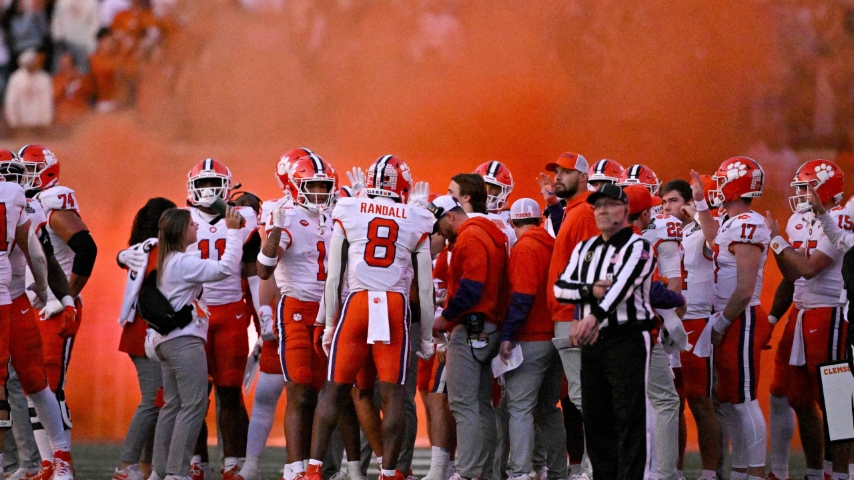
The Protect College Sports Act would not erase that conference revenue gap. It could, however, limit how easily greater institutional wealth can be converted into an overwhelming advantage in acquiring and retaining players.
A financial ceiling with room for retention
The House v. NCAA settlement created a system allowing schools to share revenue directly with athletes, with the 2026-27 cap at approximately $21.6 million.
The Senate legislation would essentially put federal enforcement behind that system while adding a separate retention fund.
Schools meeting academic benchmarks could spend an additional $22.5 million to retain athletes who have already spent at least a full season at the institution. Another $5 million could become available, dollar-for-dollar, based on spending on athletes in women's and Olympic sports.
That means schools could have roughly $49 million available between the existing revenue-sharing limit and the maximum retention allowance.
Just as important for Clemson, the legislation attempts to prevent wealthier programs from simply routing additional compensation through closely connected NIL organizations.
An amendment adopted as the legislation moved through the Senate clarified that payments from entities associated with a university, such as certain collectives, count toward the school's revenue-sharing cap. Legitimate outside NIL opportunities remain protected, but NIL agreements must have a valid business purpose.
That distinction could be significant.
Clemson does not suddenly receive the same conference distribution as Ohio State, Michigan, Alabama or Georgia. The bill instead establishes common financial rules governing how schools and associated entities can compensate players.
In other words, it would not completely level college football's financial playing field, but it could narrow one of its most important competitive disparities: the amount of institution-connected money that can be directed toward assembling and retaining a roster.
Another potential financial tool for the ACC
The legislation also creates an intriguing possibility involving television money.
Schools and conferences could voluntarily combine their media rights and negotiate them collectively, similar to the model used by major professional sports leagues. The legislation provides antitrust protection for such an arrangement, while existing television contracts remain protected.
A participating collective would also have to distribute at least 15% of certain remaining pooled media revenue equally among participating FBS institutions after minimum distributions were satisfied, with additional revenue tied to each school's contribution to the media package.
That provision could eventually give the ACC schools another mechanism to address the widening television-revenue gap, although participation would be voluntary and existing contracts cannot simply be discarded.
The difference in resources is already evident. Clemson's $55.1 million ACC distribution for 2024-25 was the conference's largest, yet it remained well below the payouts received by the Big Ten's highest earners, including Ohio State at $91.6 million and Penn State at $88.9 million.
Putting brakes on a super league
The legislation also addresses concerns about further consolidation of college football's wealthiest programs.
Discussion around the bill has frequently included the possibility of a future "super league" dominated by college football's richest brands. However, SEC commissioner Greg Sankey and Big Ten commissioner Tony Petitti have denied that their conferences have discussed merging into such a league.
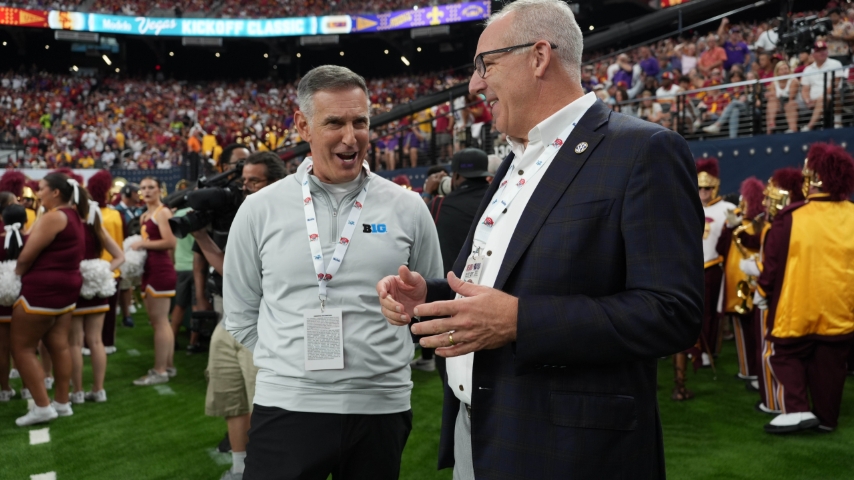
Still, the Protect College Sports Act contains provisions designed to make massive consolidation more difficult and restrict outside entities, including private-equity-backed groups, from assembling a breakaway league. The Senate also amended the legislation to allow major conferences to grow to as many as 20 institutions.
The bill would also temporarily make movement between major conferences more difficult. A school leaving one of the wealthiest conferences for another would generally have to spend three years as an independent or outside that financial tier before joining another power conference, although that restriction would sunset after six years.
Those provisions are particularly relevant to the ACC, which has spent years dealing with questions surrounding its financial position relative to the SEC and Big Ten.
Eligibility would change, too
One of the bill's most consequential football provisions has nothing directly to do with money.
The Protect College Sports Act would establish a federal framework limiting a Division I or Division II athlete's eligibility to a maximum five-calendar-year period.
The clock would begin at whichever occurs first: the athlete's initial full-time enrollment in college or the beginning of the academic year following his or her 19th birthday.
That second provision is significant.
An athlete could not indefinitely delay the start of the eligibility clock simply by postponing college enrollment. Once the academic year following the athlete's 19th birthday begins, the five-year window would start even without full-time college enrollment.
There would be exceptions. Time away because of pregnancy, a religious mission or active-duty military service would not count against the five-year period. The legislation also permits the NCAA to create uniformly applied exceptions for circumstances such as serious injuries or medical conditions.
The legislation would additionally allow governing bodies to enforce eligibility restrictions involving participation in professional sports and academic requirements. The issue became more prominent this year as schools explored the boundaries of current eligibility rules, including LSU's ultimately abandoned plans involving players who had participated in NFL training camps.
Transfer portal gets new limits
The current era of nearly unrestricted player movement would also change.
Athletes would generally receive one transfer during a five-year eligibility period without being required to sit out a season. A second transfer could result in the loss of one year of eligibility, although the bill provides exceptions for circumstances including a discontinued sport, a coaching departure, graduate education and cases involving sexual assault or harassment.
The NCAA would also receive limited antitrust protection to establish and enforce transfer windows, eligibility requirements and rules designed to prevent tampering.
That could benefit programs that emphasize player development and retention by making it more difficult for wealthier programs to continually recruit established players away from other schools.
More protections for athletes
The bill is not limited to competitive and financial regulations.
It would establish a federal right for athletes to earn NIL compensation, cap agent fees at 5%, prevent scholarships from being revoked because of injury or athletic performance and guarantee scholarship assistance for as long as 10 years after an athlete's eligibility expires so he or she can complete a degree.
Division I schools would also be required to cover out-of-pocket costs associated with athletic injuries and illnesses while athletes are competing and provide coverage for sports-related medical issues for five years after their eligibility ends.
The legislation also contains protections intended to preserve women's and Olympic sports, an important issue as schools redirect millions of dollars toward football and men's basketball player compensation.